
Hurricane Season and Your Home's Exterior in Pinellas County
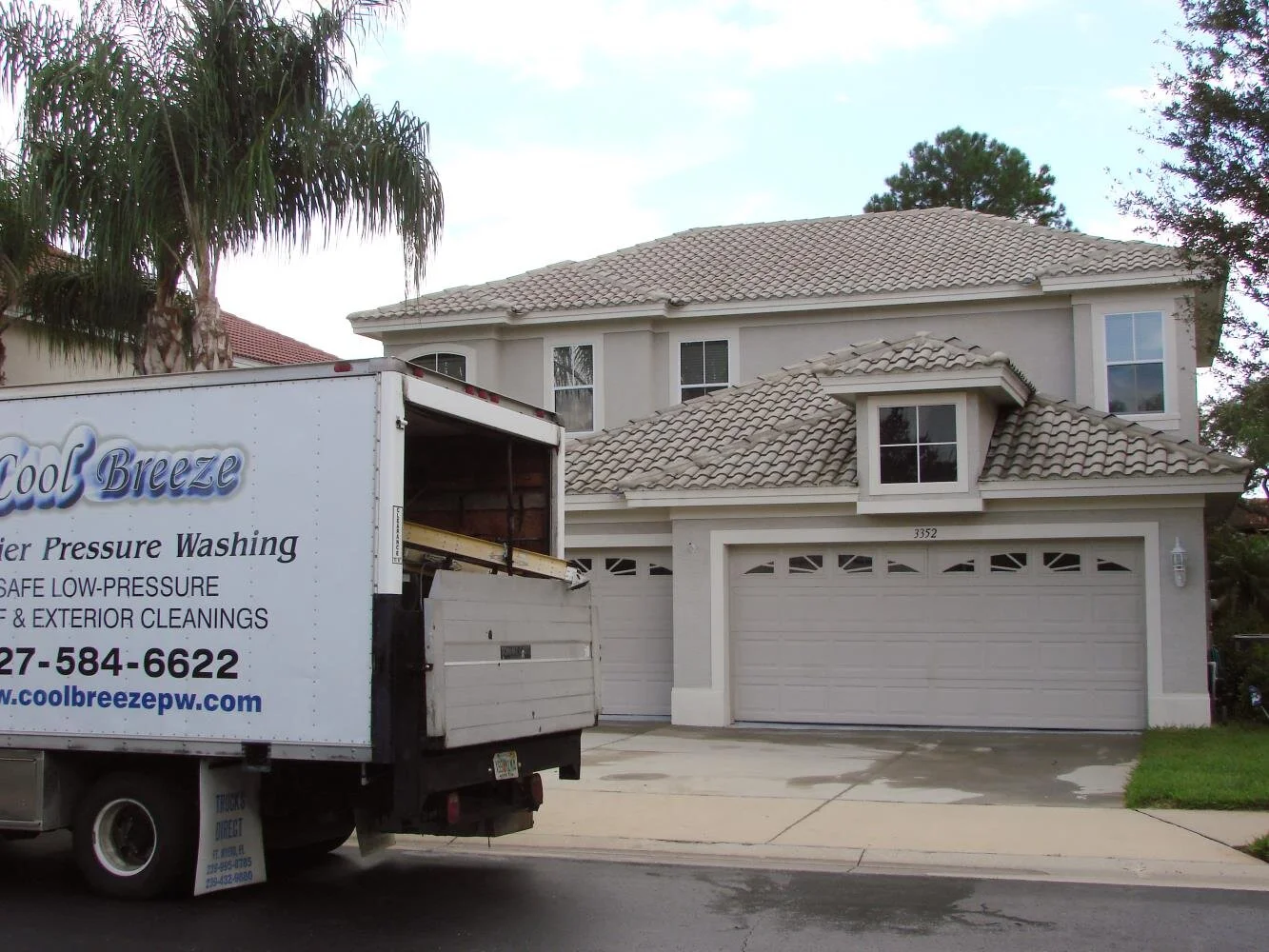
Storm season changes the exterior-cleaning calendar in Pinellas County twice. Before it starts, cleaning gives you clear surfaces and a dated record of how the property looked while everything was intact. After a storm passes, the job is getting wind-driven organic debris off concrete, pavers, screens, and painted walls before it stains. Exterior cleaning does not protect a property from storm damage.
Cool Breeze has worked through storm seasons in Pinellas County since 1999. Here's how we handle the before and the after, and what goes in the written scope for each.
When should you book pre-hurricane-season exterior cleaning?
Spring is when most Pinellas County pre-season work gets booked. The Atlantic season runs June through November, and the National Weather Service Tampa Bay office is the local forecast source most people here watch once the season opens. Spring timing works because the dry months have finished dropping oak pollen and leaf litter, growth on shaded slopes has had all winter to take hold, and the surfaces are dry enough to work.
It's also easier to schedule. Once the summer afternoon storms set in, wet surfaces and lightning push work later in the week more often.
What should be cleaned before hurricane season?
A pre-season list covers five surfaces: gutters and downspouts, the roof, the pool cage and lanai, flat concrete, and walls and soffits.
| Surface | What pre-season cleaning covers | Why it comes before June |
|---|---|---|
| Gutters and downspouts | The components that have to move a lot of water when heavy rain comes all at once | Clearing them helps drainage as designed, though it does not prove the system works |
| The roof | A soft wash that removes organic staining from the slopes | Leaves a dated photo of an intact roof |
| Pool cage and lanai | Screens that collect pollen and film | Heavy rain drives that film into the deck below |
| Driveway, walkways, and pool deck | Flat concrete where growth builds | Growth makes flat concrete slick |
| Walls and soffits | Mildew film on the shaded sides | Wasp and mud dauber nests collect under eaves |
Why photograph the property before storm season?
A dated photo records how the property looked while everything was intact, and people tend to miss this part. A cleaned roof photographed on a known date is a clear record of its condition before anything happened to it. If you later need to describe the roof as it was, dated before-and-after photos and a written scope are better than memory.
A cleaning visit is not an inspection, and it cannot tell you whether a roof is sound. Ask a licensed roofer about condition and your insurance agent about coverage. Our guide to roof condition and Florida home insurance covers where those lines fall.
What needs cleaning after a storm?
Wind-driven organic debris needs clearing before it stains, because wind puts organic material on every surface it can reach. Leaf litter, twigs, seed pods, and torn foliage land on the driveway, pack into the pool cage gutters, and stick to walls. In Florida heat that material starts breaking down against the surface, and the tannins it releases stain concrete, pavers, and painted stucco. The longer it stays, the harder it is to lift.
After a storm, clear the debris first, then look at what it left behind. Tannin staining, rust marks from anything metal that blew in, and general film all get scoped separately, because they respond differently from ordinary buildup.
Does exterior cleaning protect against storm damage?
No. Exterior cleaning is an appearance and maintenance service. It does not prevent storm damage, it does not make a roof more wind-resistant, and it does not replace an inspection or a repair. Anyone selling it as storm protection is overselling it. It removes visible growth and debris from the surfaces named in the quote, on a documented date.
Is it safe to clear storm debris yourself?
Right after a storm is the worst time for a homeowner to be on a ladder. The ground is soft, debris is everywhere, and the roof edge is wet. OSHA's ladder-safety guidance sets a non-self-supporting ladder at roughly one foot of standoff for every four feet of working length, and on soaked ground that ratio is a real limit. Where a run cannot be reached safely, it gets named as an exclusion and is not attempted.
How does weather affect scheduling?
Weather limits go in the written quote, not in a phone promise. Wind moves solution where it should not go, rain cuts dwell time short, and a wet roof changes the access plan. When a service window has to move, it moves. Free estimates apply either way, and city details are on the Clearwater, St. Petersburg, and Largo pages, or the full service-area directory.
Storm season FAQs
When should I schedule exterior cleaning before hurricane season?
Most Pinellas homeowners who plan ahead book in spring, before the season starts in June. By then the dry season has finished dropping pollen and growth, and the surfaces go into the stormier months clean and documented.
Availability still depends on the schedule.
Should I clean the roof before a storm or after?
Both have a purpose, and they answer different questions. Cleaning before gives you a dated record of how the roof looked while it was intact.
Cleaning after removes the organic debris a storm drove onto the surface. Which one you need depends on what your roof looks like right now.
Does clearing gutters help during heavy rain?
Clearing debris helps the system drain the way it was designed to, which is what you want when heavy rain comes all at once.
A cleaning cannot tell you whether the drainage works as it should, and it is not a roofing, fascia, or grading inspection. If a part looks damaged, it needs the right kind of evaluation, not another wash.
How fast should storm debris come off the surfaces?
Sooner is easier. Wet leaf litter and other organic matter left on concrete, pavers, or painted surfaces in Florida heat can leave tannin staining, and the longer it stays, the harder it is to lift.
The written scope records what's being treated and what may not fully clear.
Getting ahead of the season, or cleaning up after one? Call 727-584-6622 or request a free written quote online. Quick answers on the FAQ page.