
Paver and Travertine Cleaning in Pinellas: What to Expect
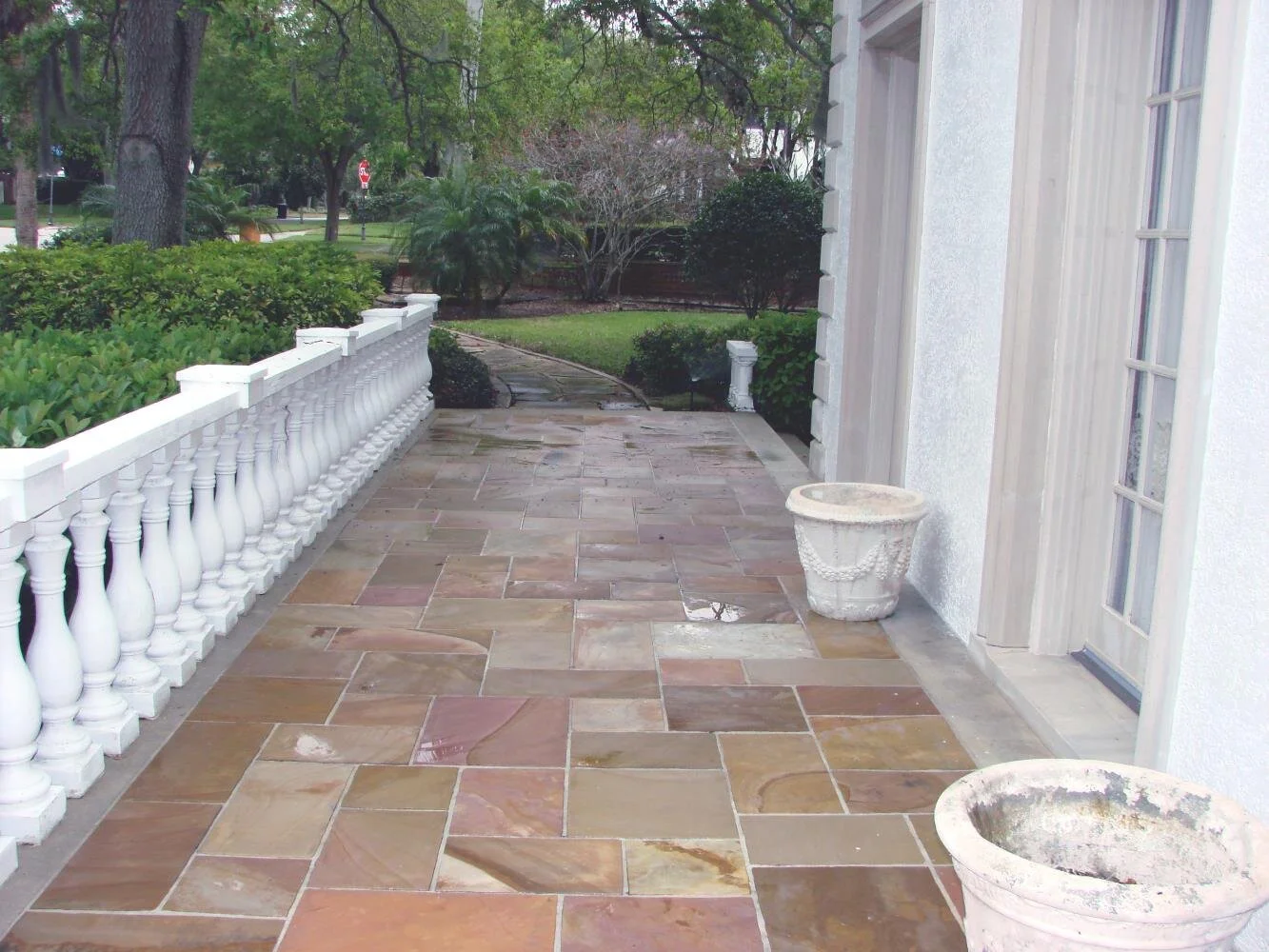
Clean pavers the way you'd clean poured concrete and the joint sand ends up on the lawn. Hardscape gets lower working pressure, attention to the joints as well as the faces, and a frank talk about efflorescence and existing sealer before anyone starts a machine. Here's what the work involves in Pinellas County.
Cool Breeze has cleaned paver drives, pool surrounds, and stone patios across Pinellas County since 1999. This post covers how the materials differ, what happens to the joints, and what should be in writing first.
Why do pavers get a different pressure than concrete?
A poured slab is one continuous surface, so a rotary surface cleaner at 2,000 to 4,000 PSI has nothing to disturb. A paver field is hundreds of separate units held in place partly by the sand between them. Run the same pressure across it and you clean the faces while digging out the joints.
So we lower the pressure, the cleaner does more of the work, and we plan the passes so water isn't driven sideways into the joints. Existing sealer adds a problem: a coating that's started to fail can lift unevenly and end up looking worse than before.
How does the paver material change the method?
Concrete pavers, travertine, slate, and marble get lumped together as hardscape, and they don't behave alike.
| Material | How it behaves | What that changes |
|---|---|---|
| Concrete pavers | The most tolerant of the four | Color-through and painted units still differ, so the finish is identified first |
| Travertine | Porous natural stone | Takes a gentler approach than concrete pavers |
| Slate | Flakes along its layers once it has weathered | Condition is assessed before a method is proposed |
| Marble | The most sensitive of the group to acidic products | Constrains which products can be used at all |
So the material and finish get identified during the walkaround, and we test a small area wherever the history is unknown. A patio someone sealed years ago is an unknown until it's tested.
What happens to the joint sand?
Expect some sand to move during a paver cleaning. That's normal, and it's why the scope says whether re-sanding is included. Re-sanding is a separate step with its own material. Joints that were already low before the work started get noted during the walkaround, so nobody's surprised afterward.
Weeds or moss in the joints get their own line in the quote. Growth in joints is a drainage and shade problem, and the UF/IFAS Extension guidance on Florida landscape conditions is a good place to read about why some parts of a yard stay wet.
What will a wash not fix on pavers?
A wash will not fix efflorescence, embedded rust, soaked-in oil, or tannin staining. The chalky white bloom on pavers is efflorescence: mineral salts moving out of the material and depositing on the surface. It's not dirt, and it doesn't respond to cleaning the way dirt does. Rust from irrigation, oil that has soaked in, and tannin from leaf litter are similar cases. Each has its own treatment and its own likely result.
All of that goes in the written quote as known limitations before work begins. Our guide to rust staining on Pinellas driveways covers the irrigation case.
Does Cool Breeze seal pavers?
Cool Breeze cleans hardscape and does not seal it. We're not a sealing contractor, and we don't sell sealing as an add-on. If you plan to have a sealer applied afterward by someone who does that work, say so when you request the quote. The surface has to be clean and fully dry first, and that changes the schedule.
Where does runoff go on hardscape?
Driveways and pool decks drain somewhere, usually toward a street or a storm inlet. Discharge into storm systems is what EPA's NPDES stormwater program regulates. On a residential job, that means directing rinse water onto vegetated ground where the site allows it. The scope names the controls being used.
What should the written scope cover?
A paver cleaning scope should cover the material and finish, the proposed method, the re-sanding question, the known limitations, and the runoff precautions.
- Material and finish, including any existing coating and its condition
- Proposed pressure and products, plus test areas where the history is unknown
- Whether re-sanding is included, and what that covers
- Known limitations such as efflorescence, embedded rust, or oil
- Landscaping and runoff precautions per product label directions
The paver cleaning service page has the full scope, and city pages cover local detail in Clearwater, Largo, and St. Petersburg. For a poured concrete driveway, the driveway cleaning page is the right one.
Paver cleaning FAQs
Does cleaning wash out the joint sand?
Some sand moves, and that's normal. It's why pavers get lower pressure than poured concrete. The written scope says whether re-sanding is included, because it's a separate step with its own material.
Joints that were already thin or washed out get documented during the walkaround.
Is travertine treated the same as concrete pavers?
No. Travertine is a natural stone with its own porosity and finish, and it gets gentler treatment than a concrete paver.
Marble and slate each behave differently again. We identify the material before proposing a method, and we often test a small area when the finish is unknown.
Do you seal pavers after cleaning?
No. Cool Breeze does not seal pavers. We clean the surface and document what we found. If you plan to have someone else apply a sealer afterward, mention it when you request the quote so drying time can go into the schedule.
Will the white haze on my pavers come off?
The white haze is efflorescence: mineral salt working its way out of the paver itself. It isn't dirt, so it doesn't wash off the way dirt does.
It goes in writing as a known limitation before work starts, and we don't promise a wash will clear it.
Pavers or stone that need attention? Call 727-584-6622 or request a free written quote online. See the before-and-after gallery for examples.