
Soft Wash vs. Pressure Wash: Safe Roof Cleaning for Florida Homes
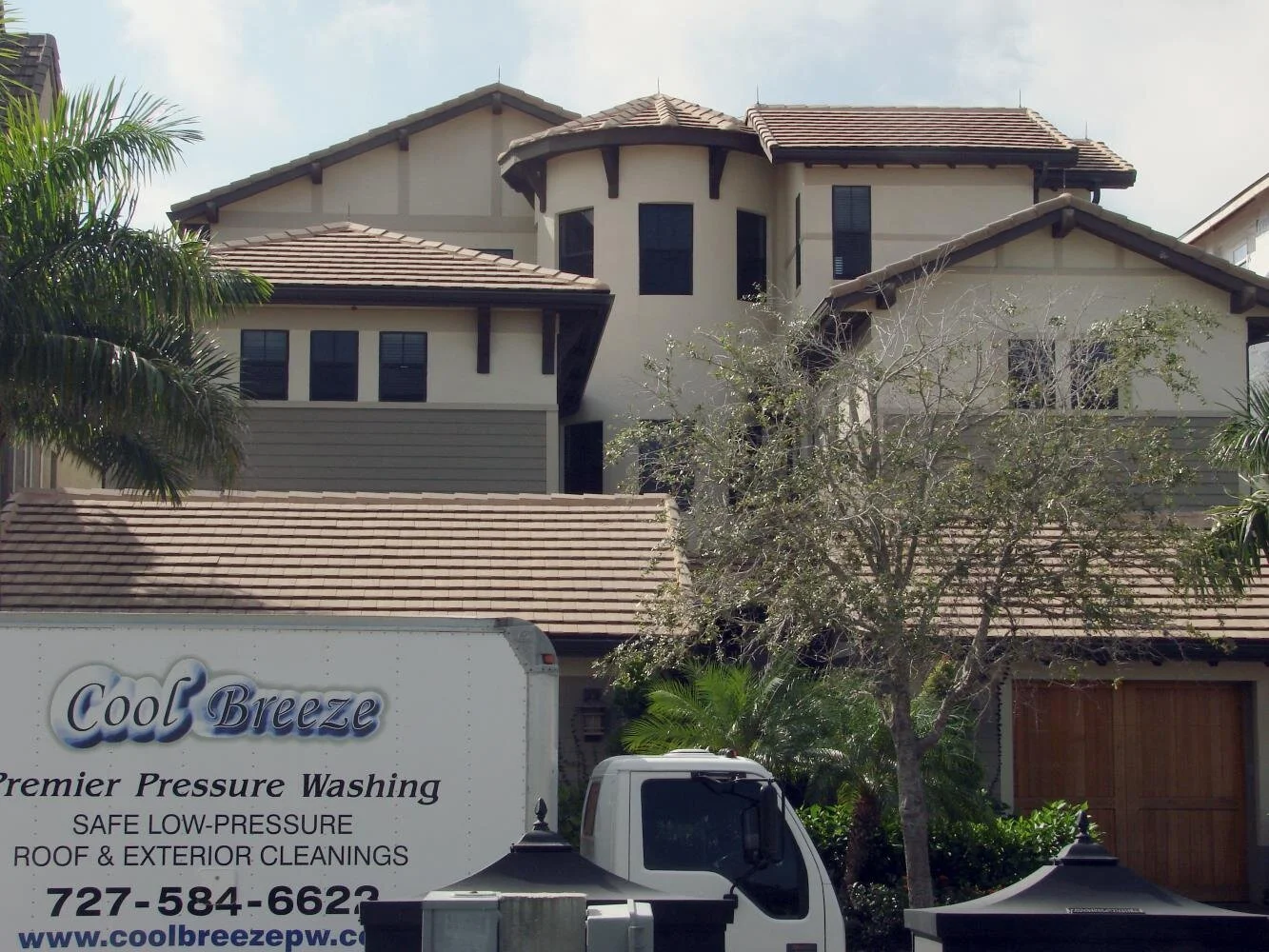
If your Florida home has black streaks on the roof, you're dealing with Gloeocapsa magma, a hardy algae that feeds on the limestone filler in asphalt shingles and thrives in our humid climate. It's tempting to blast these streaks away with a pressure washer. But high-pressure washing can scour granules, drive water under laps and past flashing, and conflict with manufacturer care guidance. ARMA directs owners toward a low-pressure bleach-and-water solution instead.
This guide compares soft washing and traditional pressure washing, explains why roofing manufacturer guidance points toward low-pressure cleaning, and describes how we approach shingle and tile roofs.
| Specification | Soft washing | Pressure washing |
|---|---|---|
| Working pressure | Under 100 PSI at the nozzle | Typically 2,000-4,000 PSI |
| What removes the growth | The cleaning solution: sodium hypochlorite blended with biodegradable surfactants | Water velocity alone |
| Usual surfaces | Roofs, stucco, siding, screen enclosures, painted wood | Concrete, pavers, block, unpainted masonry |
| Asphalt-shingle guidance (ARMA) | Directed toward a low-pressure bleach-and-water solution | ARMA's residential manual warns against power washing asphalt roofing |
What is Soft Washing?
Soft washing is an exterior cleaning method that uses cleaning solutions in place of blasting power. A pump applies a mix of water, biodegradable surfactants, and sodium hypochlorite at a gentle pressure under 100 PSI (pounds per square inch).
That's close to garden-hose pressure.
The cleaning solution does the work. It treats algae, mold, mildew, lichen, and moss, so the growth can be rinsed away at low pressure. High pressure removes the visible layer and leaves what's under it untreated.
Why does high pressure ruin shingle roofs?
Asphalt shingles are coated with ceramic granules that reflect sunlight and shield the underlying petroleum-based shingle from UV degradation. High pressure scours these granules off. They collect in your gutters, and the shingle fabric is left exposed to sun damage and cracking.
The Asphalt Roofing Manufacturers Association (ARMA) residential asphalt roofing manual warns against using a power washer on asphalt roofing, and ARMA's algae discoloration bulletin directs owners toward a low-pressure bleach-and-water solution instead. The instructions for your roofing product control. A manufacturer may treat high-pressure cleaning as grounds to deny a warranty claim.
What are the risks of pressure washing a tile roof?
Florida tile roofs, concrete or clay, are durable but need gentle care. Blasting concrete tiles with high pressure strips their protective glazed finish and leaves the raw concrete porous. Porous tiles soak up moisture, algae and black mold grow on them more easily, and you'll have to clean the roof far more often.
Concrete tiles are also built to shed water downward. Blasting water upwards or sideways at high pressure can force water beneath the tiles, saturating the tar-paper or synthetic underlayment. If the underlayment is aged or brittle, the high-pressure water will tear through it and cause active ceiling leaks inside your home.
How does Cool Breeze clean roofs?
At Cool Breeze, we follow manufacturer standards strictly. Our roof cleaning method includes:
- Low Pressure: We apply our soft-wash solution using dedicated low-pressure pumps that run under 100 PSI.
- Plant Protection: A dedicated ground crew member's only job is keeping your landscaping pre-wet and rinsed throughout the process, with plants covered when the weather and conditions call for it. The written scope names those precautions for your property.
- Free Gutter Cleaning: We clear and clean your gutters before the roof washing starts so that runoff flows cleanly down the downspouts instead of spilling over onto your landscaping.
- Written Scope & Price: We spell out every step of the cleaning in a written scope of work before we start, so you know what's included.
From the crew
On a roof we are applying solution at under 100 PSI - low enough that you can hold your hand in front of the nozzle. The pressure is not what lifts the growth, so there is no reason to reach for more of it.
Get a Free Written Estimate
If a company proposes pressure washing a shingle or tile roof, keep looking. We serve the 24 municipalities in Pinellas County, including Clearwater, St. Petersburg, Largo, and Seminole. See our service-area directory or contact us to request a free custom quote for your property.
Frequently Asked Questions
What is the difference between pressure washing and soft washing?
Pressure washing uses high-velocity water (typically 2,000 to 4,000 PSI) to blast dirt off hard surfaces like concrete. Soft washing uses a low-pressure spray (under 100 PSI, similar to a garden hose) with biodegradable cleaning solutions that treat organic growth like mold, mildew, and algae on delicate surfaces like roofs, stucco, and siding.
Why is high pressure dangerous for asphalt shingle roofs?
High-pressure washing scours off the protective ceramic granules embedded in asphalt shingles. Those granules shield the shingle from UV and weathering, so removing them exposes the material underneath, and the same force may tear or lift the shingle tabs.
ARMA's residential manual warns against using a power washer on asphalt roofing, and the instructions for your roofing product control.
Can concrete and clay tile roofs be pressure washed?
High-pressure washing on tile roofs is risky. It can wear away the protective color coatings on concrete tiles, which makes them more porous and quicker to regrow algae.
High pressure can also blow water backward under the tiles, damaging the waterproofing underlayment and causing roof leaks inside the house.
Is soft washing safe for my landscaping and plants?
Product compatibility and risk depend on the formulation, concentration, application and site conditions. Cool Breeze uses a dedicated ground person to pre-wet and rinse the surrounding plants throughout the job, and the written scope names the precautions for plants and runoff at your property.
We do not promise a zero-risk outcome.