
Why Does My Roof Have Black Streaks? Gloeocapsa Magma in Florida
The black streaks running down your roof are almost always Gloeocapsa magma, an airborne algae that lands on Florida roofs, feeds on moisture and minerals in the roofing surface, and builds a dark protective pigment as it spreads. It shows up first on shaded and north-facing slopes, and it doesn't rinse off in the rain. Soft wash roof cleaning removes it with a cleaning solution at low pressure, without blasting.
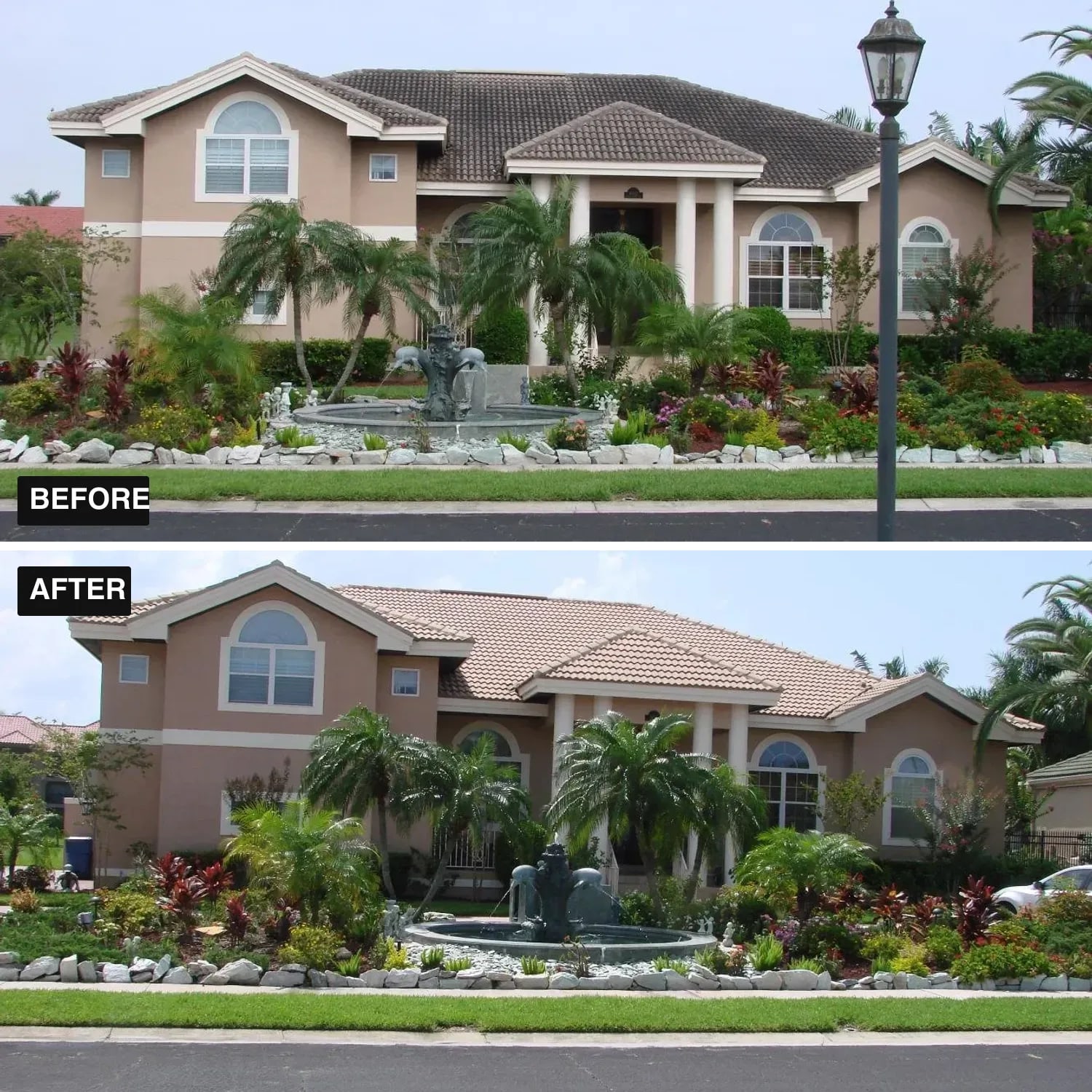
What is Gloeocapsa magma?
Gloeocapsa magma is a cyanobacteria, a photosynthetic organism that travels as airborne spores. When a spore lands on a roof that stays damp long enough, it takes hold and starts multiplying. On asphalt shingles it has a ready food source: the crushed limestone filler used in modern shingle manufacturing.
On tile it colonizes the porous surface and the mortar lines.
The color is the giveaway. As the colony matures, it produces a dark pigmented sheath that shields it from ultraviolet light. That pigment is the "black" in black streaks. The streak shape comes from gravity: rain washes spores and colony fragments down-slope, so the growth spreads in vertical runs from wherever it first took hold.
The Asphalt Roofing Manufacturers Association publishes guidance on algae discoloration that matches what we see on Pinellas roofs: it's widespread, it favors moisture, and the guidance recommends gentle chemical cleaning to remove it, not high pressure.
Why do Florida roofs get it so badly?
Gloeocapsa magma exists across the Southeast, but Tampa Bay gives it nearly ideal conditions:
- Humidity. Pinellas County spends most of the year humid. Roofs that never fully dry give colonies a permanent water supply.
- Warm nights. Growth doesn't pause overnight the way it does in cooler climates.
- The summer rainy season. Daily storms from June into September keep surfaces wet and wash spores from roof to roof.
- Shade. Oak canopy in neighborhoods like those around Largo Central Park or the older streets of Clearwater and Dunedin keeps slopes damp longest. North-facing slopes streak first for the same reason.
- Salt air, near the beaches. Homes from Indian Rocks Beach to Treasure Island collect a salt film that holds moisture against the surface between rains.
If your neighbor's roof is streaked, spores are traveling your street every time the wind picks up. That's why whole blocks tend to darken together.
Do tile and shingle roofs streak differently?
On shingle roofs, streaks usually show as long gray-black runs that make the whole slope look dirty and tired. On tile roofs, common across St. Petersburg, Seminole, and the waterfront neighborhoods, growth often starts in the shaded channels between barrel tiles and along mortar, then spreads across the tile face until a terracotta roof looks gray.
The material changes the cleaning plan too. Tile is rigid and brittle, and walking it takes experience. Shingles hold their protective granules loosely enough that aggressive cleaning can dislodge them. Both are reasons the method below relies on chemistry and keeps the pressure low.
Why not just pressure wash the streaks off?
High pressure can strip the visible growth, along with things you want to keep. On shingles, concentrated pressure can dislodge granules and disturb the mat. On tile, it can crack brittle pieces and drive water where it should not go.
The streaks come back anyway if living growth survives in the pores.
A soft wash works the other way around: a cleaning solution applied at low pressure does the killing and loosening, dwell time lets it work, and a thorough rinse takes the residue away. The pressure stays low because the chemistry is doing the job.
What does a Cool Breeze roof cleaning look like?
- We document the roof material and visible condition first, then propose the method in a written scope.
- Products follow their label directions, and the scope records dilution, application, and rinse plans.
- A dedicated ground person wets the landscaping, which may also be covered depending on the weather and circumstances, and treated surfaces are rinsed completely.
- Gutters are cleaned before the roof work starts, and gutter cleaning is included at no added charge with every roof cleaning we quote.
- The quote states the price, the service window, and any exclusions before work begins.
Will the streaks come back?
Eventually, regrowth is possible anywhere spores travel, and how soon varies with shade, trees, moisture, roof material, and weather. A company cannot promise you a fixed number of streak-free years. Some homeowners add zinc or copper strips at the ridge, since rain washing over those metals releases ions that inhibit growth below. That's a roofing decision to weigh with a roofer, and Owens Corning's algae-resistance guidance covers the same idea from the shingle-manufacturer side. The simpler step is to check your slopes from the ground now and then, and get a written quote when streaks start showing. Neighbors in Clearwater, St. Petersburg, and Largo can start with their city pages.
Black streak FAQs
Are black roof streaks mold or algae?
Usually algae. The streaking most Florida homeowners see is associated with Gloeocapsa magma, a cyanobacteria that darkens as it grows.
Mold and mildew tend to show up in shaded, damp patches. Long down-slope streaks point to algae. A webpage cannot diagnose your roof, so the written scope records the visible condition being treated.
Do black streaks hurt the roof, or just its looks?
The streaking itself is mainly a cosmetic issue, and that's how Cool Breeze treats it: cleaning targets the visible discoloration described in the written scope.
Questions about the roof's underlying condition, granule wear, or repairs are for a licensed roofer. A cleaning company cannot answer them.
Can I remove Gloeocapsa magma myself with bleach?
Roof work is ladder work, and OSHA's ladder-safety guidance exists for a reason. Product labels also set dilution, application, and rinse rules that are easy to get wrong over landscaping.
Cool Breeze applies label-directed solutions at low pressure with a ground person protecting plants, and puts the method in writing first.
How does Cool Breeze remove black streaks?
With a soft wash: low pressure, a cleaning solution matched to the documented roof material, dwell time, and a full rinse.
Every roof cleaning we quote includes gutter cleaning at no added charge, and the written quote lists the method, precautions, exclusions, and price before work starts. Call 727-584-6622 for a free quote.
Streaks on your slopes? Call 727-584-6622 or request a free written quote online. Pricing context lives on the pricing page and quick answers on the FAQ page.