
Pressure Wash or Repaint? How to Tell What Your Florida Exterior Actually Needs
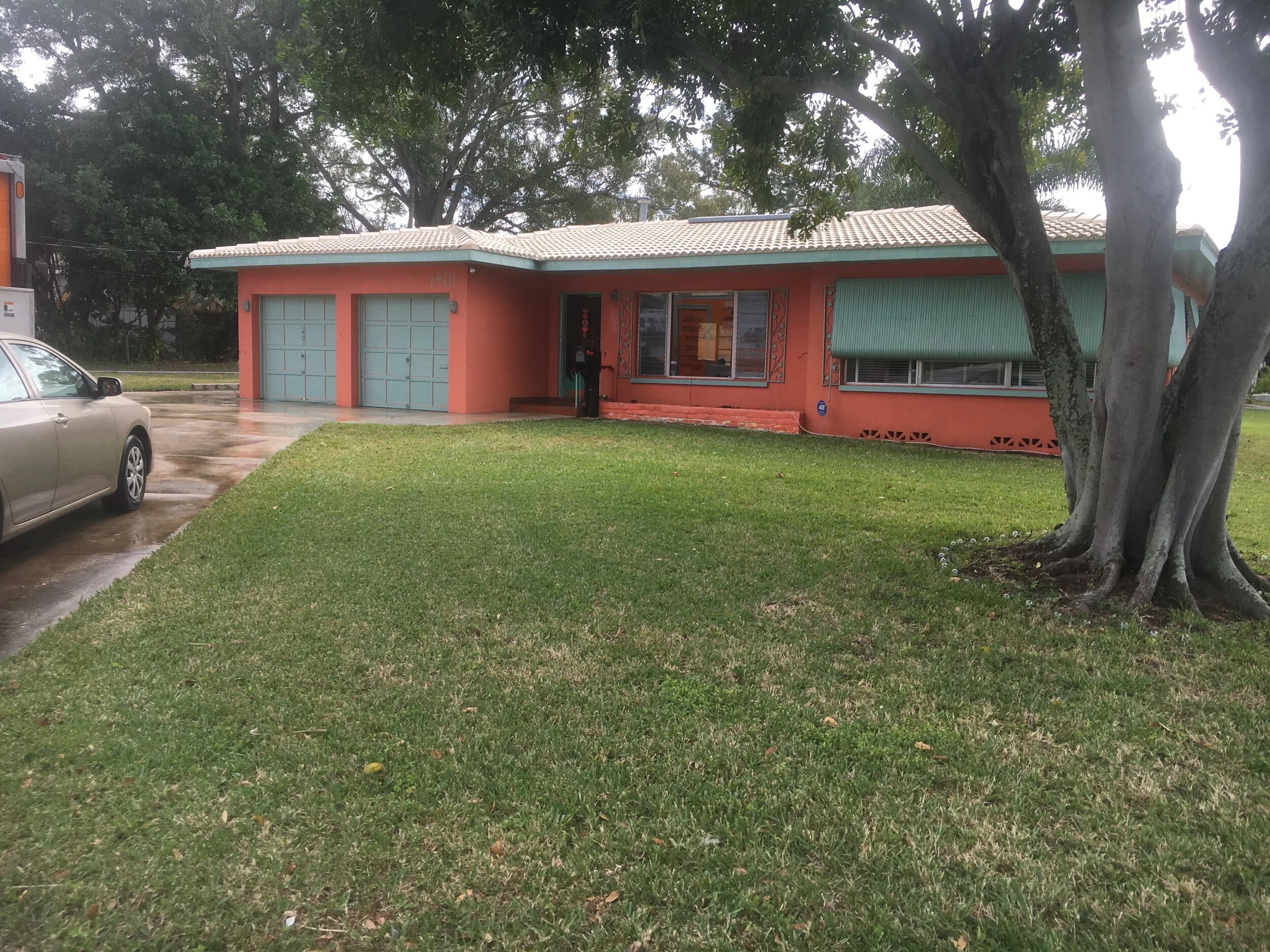
Two trades look at the same dirty wall and see two different problems. Organic growth, surface film and general grime are on top of the coating and wash off. Chalking, failed caulk, peeling and blistering are the coating itself failing, and no wash fixes that. Here's how to tell the two apart on your own wall.
Cool Breeze cleans exteriors in Pinellas County and parts of Tampa Bay. Painting is outside our scope, so this post goes through the wall conditions and which trade each one points to.
What does a wash actually remove?
On a Florida wall, most discoloration is biological. Algae and mildew settle where moisture lingers, and they grow on the surface of the coating. Add road film, pollen, and the mud irrigation throws onto the lower wall.
A low-pressure wash with a diluted solution is for surface deposits. That job is house washing. The EPA's mold and moisture guidance makes a point that applies here: the moisture source needs attention as much as the growth.
What will a wash not touch?
A wash will not touch chalking, failed caulk, peeling paint, or substrate problems. Each of those is a coating or repair question.
| Problem | What it is | What washing does |
|---|---|---|
| Chalking | The binder at the surface has broken down under UV and the film releases pigment as powder | Exposes it but does not correct it |
| Failed caulk | Split or missing sealant at window perimeters, door casings, and control joints | Nothing; resealing is separate work |
| Peeling and blistering | The film has lost adhesion to the substrate or to the coat beneath | On a wall with loose paint, a wash will take loose paint off |
| Substrate problems | Cracked stucco, rot at trim bottoms, swollen or delaminated hardboard siding | Makes them visible; the repair belongs to another trade |
Washing tends to make these more obvious. On a wall with loose paint, a wash will take loose paint off. That's worth saying before the job, so the surface condition goes in writing and the accepted written scope controls.
How do you test for chalking paint?
Pick a dry wall on the south or west side, press a dark cloth or your open palm flat against it, and pull down about a foot. A visible film of pigment powder on your hand means the coating is chalking. ASTM D4214 is the published method a painter uses to grade how far chalking has gone, and a prep spec depends on that grade. The palm test doesn't replace it. It tells you which trade to call first.
Chalking causes two problems. A wash takes loose chalk away and the wall may look better for it, but the film underneath keeps releasing pigment. And fresh paint doesn't bond well to a chalky surface. A chalking wall is a painter's wall.
What should you check on caulk lines and joints?
Look at the joint where trim meets stucco or siding, at the windows and doors. Run a fingernail along it. Sound caulk is flexible and still bonded on both faces. Failed caulk is hard, split down the middle, or pulled away from one face so you can see a gap.
Open joints change the cleaning plan, because water follows them. Rinsing a wall with open joints can put water where you don't want it. We'd prefer the joints get sealed first and the wall cleaned afterward.
What should you look for on shaded elevations?
North faces, walls under deep soffits, anything behind a hedge or in the shade of a neighbor's oak. Those stay damp longest, and that's where growth builds up. Cut back what holds moisture against the wall, confirm the gutters discharge away from that elevation, then clean it. That's mold and mildew removal work, and a different finding from a wall that's dull on every side.
One test tells them apart. Rub a small area with a wet white rag. If the discoloration transfers, it's on the surface. If nothing transfers and the wall is still uneven, it's in the coating.
Can washing restore faded color?
Sunlight breaks down pigment inside the paint film. Take the deposit off and the real state of the film shows through. Sometimes that looks better, and sometimes it looks worse than you expected, because an even layer of grime was hiding an uneven fade. No cleaning process puts pigment back into a film.
Who sets the prep if you are painting?
The prep spec is not ours to write. A coating data sheet may list the cleaning method the product accepts, an allowable pressure, how dry the substrate has to be, and the dry time before the first coat. Not every sheet lists all four, and the label on the product your painter is using governs. Painters also check whether the existing coating is still bonded before they recoat, and cladding manufacturers publish their own cleaning instructions for siding and trim.
If we're washing ahead of a paint job, we want the painter's requirements in writing first: method, moisture limit, drying period, and who does the scraping. Then the accepted written scope controls.
One more item is the painter's job. If the house predates 1978, the paint may be lead-based, and the EPA's Renovation, Repair and Painting program sets requirements for work that disturbs it. Florida's DBPR list of license-requiring services shows which trades need state credentials. Check it once a scope drifts toward repair.
Which contractor should you call first?
Which contractor to call first depends mostly on what comes off on your palm.
| What you see | Call first | Why |
|---|---|---|
| Growth on the shaded sides, sound paint, nothing on your palm | A washer | That's pressure washing work, and our low-pressure surface guide covers what each material tolerates |
| Chalk on your palm, split caulk, lifting paint, uneven color under the dirt | A painter | Ask what wash they want as prep |
| Both | Sequence it | Clean, repair and caulk, then coat, on the painter's timetable |
We'll tell you which of those you're in. Our pricing page explains how a wash is scoped and the FAQ answers method questions.
Wash or repaint FAQs
Should I pressure wash or paint my house first?
Wash first when the coating is sound. Growth and road film hide hairline cracks, split caulk and the real color of the paint, so a repaint quoted over a dirty wall is quoted over guesswork.
When the paint is already failing, the order flips. The painter sets the prep and names the method and the drying period, and the cleaning follows that spec.
Does chalking mean I have to repaint right away?
Not by itself. Chalking is a surface condition a painter preps around, and a light chalk on a sun-facing elevation is ordinary in Florida.
It does mean the wall isn't a straight cleaning job when a repaint is close. The painter writes the prep, and that spec depends on the grade of the chalking.
Can a wash make an older wall look uneven?
It can. An even layer of grime hides differences the coating already has. Once it comes off, a sun-facing elevation and a shaded one can look like two different colors, and old patches or repainted trim can show their edges.
Cleaning doesn't create any of that. It was there under the dirt. Where the coating history is unknown, a test area in a low-visibility spot shows what's underneath.
Can washing damage paint that is already failing?
Yes. A coating that has lost its grip on the substrate can lose more of it when water and solution reach the edges, at low pressure as well as high.
So we check the condition before anything is turned on: a small test area, reduced pressure on coated walls, and the state of the paint and the exclusions written into the scope you accept. If the film is so far gone that cleaning lifts it, the job is a painter's.
Not sure which of the two problems you have? Call 727-584-6622 or request a free written quote online. If the wall needs a coating, we will say so.