
An Exterior Checklist for Seasonal and Snowbird Homes
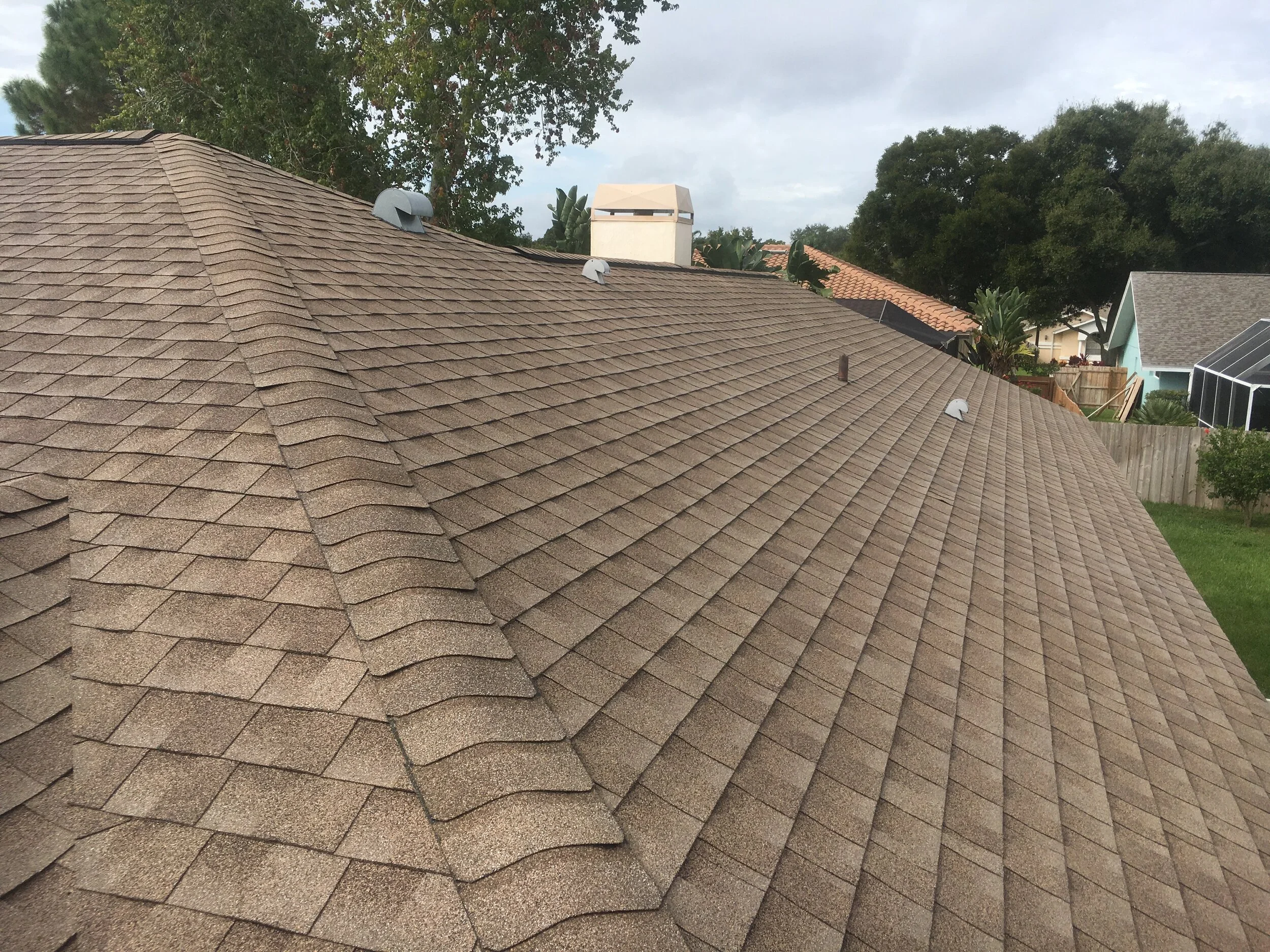
A Pinellas County house left through the summer comes back to you differently than one that was lived in. Nobody rinsed the pollen off the lanai, nobody noticed the north wall going green, and nobody moved the sprinkler head that has been hitting the driveway since April. None of that is damage. It's a season of growth on surfaces nobody was watching, and it's easy to plan around.
Cool Breeze has worked with seasonal owners in Pinellas County since 1999, often through a property manager or a neighbor. Here's what to arrange in each direction.
Why does an empty house show growth faster?
An empty house shows growth faster because nobody is there to step in. Nothing about the building is different. An occupied house gets its walkway swept, its lanai rinsed, and its sprinkler noticed when it starts spraying the garage door. An empty one gets all of that on a timer with no one adjusting anything.
Meanwhile the conditions keep working. The wet months bring daily afternoon storms, the National Weather Service Tampa Bay office tracks the pattern that keeps shaded surfaces damp, and organic growth takes hold fastest where a surface dries slowest. Come back after the season and the difference shows most on the north side, under the canopy, and along the irrigated edge.
What should be done before you leave?
Five things are worth arranging before a seasonal owner leaves Pinellas County, and the irrigation check is the highest-value five minutes on the list.
| Item | What it covers | Why it matters with nobody there |
|---|---|---|
| Gutters cleared | The system has to carry summer volume | Clearing supports the drainage the system was designed for |
| Roof looked at from the ground | Streaking that's already visible | It will be more established when you get back, and a soft wash before you go is easier than after |
| Pool cage and deck | Screens that hold pollen and film | Heavy rain drives that film down into the deck |
| Irrigation checked | A head clipping the driveway or a wall | It will run all season, and shallow-well water can leave iron staining |
| Someone named as the contact | Gate access and a working spigot | The crew needs access, not your presence |
UF/IFAS Extension covers Florida irrigation and water quality.
What should be done before you return?
The list is shorter and mostly about appearance. A house wash on the elevations that went green, the driveway and entry walk, the lanai and screens, and the roof if streaking got ahead of you. Work backward from your arrival date and build in a weather cushion, because a summer afternoon can move a service window.
If you'd like photos of the finished work before you arrive, ask for them when you accept the quote.
How does absentee scheduling work?
The written quote does the same job it always does, just remotely. It names the included surfaces, the method for each material, the landscaping and screen precautions, the exclusions, the price, and the service window. You review and accept it before anything happens. What the crew needs on the day is gate access, a working water source, and a contact who can answer a phone.
Plenty of seasonal owners route this through a property manager. That works fine as long as the manager has authority to accept the scope, and it's worth saying clearly who that is.
Is recurring service available?
For an owner out of state, a fixed-rate maintenance program is often the simplest arrangement. The written quote sets the surfaces included on each visit, the frequency, and the fixed rate, so the property stays on a cadence instead of getting a catch-up wash once a year. Renewal terms are in the same document, and free estimates apply the same as anywhere else.
What does this not cover?
Exterior cleaning is appearance and maintenance work. It isn't a property inspection. A cleaning crew cannot tell you what condition the roof or the building envelope is in, and a visit is no substitute for someone checking on the house. If you want the condition assessed, call a licensed roofer or inspector. Our storm season checklist covers the other seasonal half, and city detail is on the Clearwater, Palm Harbor, and St. Petersburg pages.
Seasonal home FAQs
Do I need to be home for the work?
Usually not for exterior cleaning, as long as access is arranged in advance. The scope needs a way in through gates, a working water spigot, and a named contact who can be reached.
Many seasonal owners use a property manager or a neighbor as that contact.
Is it better to clean before I leave or before I return?
Both make sense, and plenty of owners do one of each. Cleaning before you leave means the property isn't sitting through months of growth looking neglected.
Cleaning before you return means you come back to a house that looks ready. Which one comes first depends on the property.
How do I pay if I'm out of state?
The written quote is sent for you to review and accept remotely, the same as it would be in person, and it lists the surfaces, method, precautions, exclusions, and price.
Nothing happens until you've accepted it. Photos can be shared afterward if you ask for them.
Can you set up recurring visits while I'm away?
Yes. A fixed-rate maintenance program sets the included surfaces, the visit frequency, and the rate in the written quote, so the exterior stays on a cadence without you coordinating each visit from out of state.
Renewal terms are in the same document.
Heading north, or coming back soon? Call 727-584-6622 or request a free written quote online. More answers on the FAQ page.