
When to Wash a House in Florida: Dry Season vs Wet Season
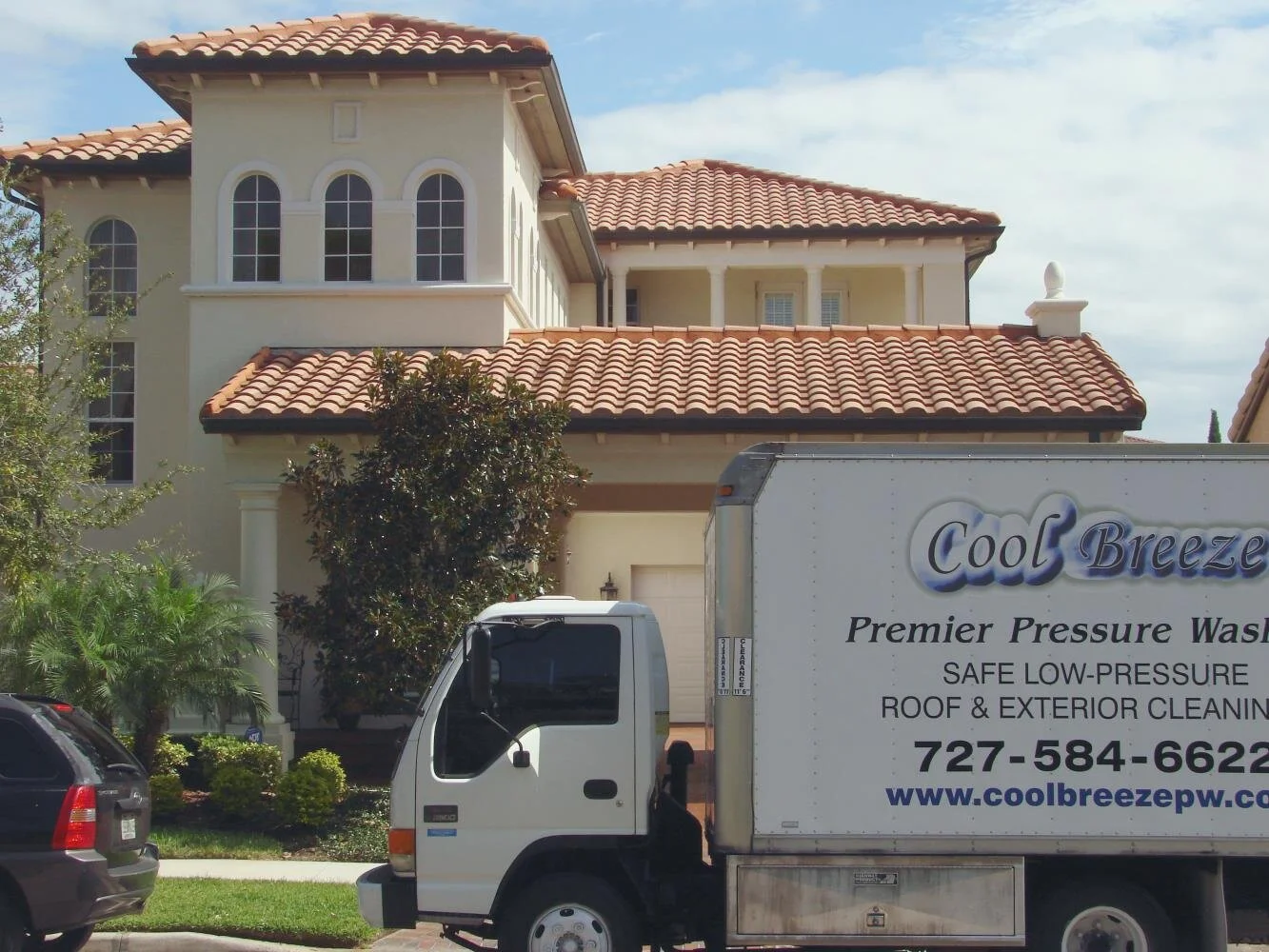
Tampa Bay doesn't have four seasons. It has a dry stretch that runs roughly November into May and a wet stretch from June through September. That split changes the logistics of a house wash: whether the surface is dry when the crew arrives, how long it takes to dry after the rinse, and how likely the day is to move. The dry months are easier to schedule and easier to dry. The wash itself comes out the same.
Cool Breeze has worked this calendar in Pinellas County since 1999. Here's what each half changes about the schedule, and what it doesn't.
What does the season actually change?
The season changes the working conditions around a wash. It leaves the method alone. This page is about timing a wash you've already decided on. Whether the house needs one is a separate question, and the answer comes from the condition of your surfaces. That's covered in the cadence discussion, which starts with a walk-around instead of a month.
The conditions it does change are whether the surface is dry when the crew gets there, how fast it dries after the rinse, whether an afternoon storm ends the day early, and how much of the day is workable.
The method stays the same all year. Painted stucco and siding get a diluted solution applied generally under 100 PSI on a house wash. Sound flat concrete gets a surface cleaner in the 2,000-plus PSI band.
Is the dry season the best time to pressure wash in Florida?
The dry season is the easier half to schedule and the easier half to dry, which is why most work lands there. In our experience, dry-season rain here usually comes with a passing front, and it doesn't build up every afternoon. Dew points run lower, and nights are cooler. That's a general pattern, not a forecast for your date, and cold fronts still bring rain in January.
That has three effects.
- Surfaces dry faster. That helps most when something follows the cleaning. Most sealer labels we work to call for a dry surface and a rain-free window after application. The label controls, even when someone would rather finish today. That's why paver work and sealing usually get scheduled in this half of the year.
- Booked days hold more often. Outdoor work stops when thunderstorms are nearby, which is the standing advice in the National Weather Service lightning safety guidance. Fewer storms in the forecast means fewer moved windows.
- The whole day is workable. With no afternoon storm line and no midday heat squeezing the schedule, the crew can work the elevations in the order the job calls for.
Can you pressure wash during the Florida wet season?
Yes, and summer work is routine. The wet months reverse all three of those advantages. Storms come most afternoons, nights stay warm, and shaded walls, north-facing slopes, and anything under a canopy get less time to dry between rain events. Work starts earlier in the day. That's partly the afternoon storms and partly the heat, which OSHA's heat guidance treats as a scheduling matter, with water, rest, and shade built into the day.
That's no reason to turn down summer work. Sales, HOA letters, rentals, and events don't wait for a dry front. It does mean a summer date is more likely to be rescheduled and needs a longer drying window afterward, and you should know that before you book one.
What does each month look like for exterior cleaning?
The Tampa Bay calendar splits into a dry stretch and a wet one, and each month affects scheduling in its own way.
| Month | Conditions | What it means for scheduling |
|---|---|---|
| November and December | Dry air settles in | Holiday deadlines land in the same weeks, though a date is not reserved until a written quote is accepted |
| January and February | The steadiest working weather Pinellas County gets | Product labels list their own temperature and dwell conditions, so a cold morning changes the sequence and leaves the pressure alone |
| March and April | Still dry | Where tree pollen and catkins land heavily, the order of the work is worth discussing before a date is set |
| May | The transition month | Dry early, with the afternoon storm pattern usually back before the month is out |
| June through September | Wet | Morning work, afternoon weather calls, and more rescheduling |
| October | Transitional, and hurricane season still open | Cleaning before the season and cleaning after a storm are their own questions, covered in the storm season checklist |
How far ahead should you schedule dry-season work?
The dry season is also arrival season. Seasonal owners come back through the fall and leave in spring, and the holidays fall in the same stretch, so those are the weeks people ask about most.
That's worth knowing, but it's no reason to hurry. A date is not reserved until a written quote is accepted. The quote names a service window and does not guarantee an hour. If you're arranging work on a property while you're away, the access side is covered in the seasonal and snowbird checklist.
What does the season not decide?
The season does not set a cleaning interval. There is no universal figure for how much time should pass between washes. Shade, tree cover, irrigation, and the surface itself have more to do with it than the month.
It also does not change what is promised. No one can tell you how long a dry-season wash will keep its look. Anyone who quotes you a length of time is giving you a sales figure.
What can still go wrong in a dry-season wash?
Cold fronts bring rain in January too, so a dry-season week can still lose a day. Aged or failing paint can react to being cleaned in any month. Iron staining from well irrigation and rust bleeding from metal keep going year round. Those are separate scopes from a wash, handled with driveway and hard-surface work. Some discoloration is in the surface itself, and washing does not lift it.
None of that is seasonal, and none of it is decided on the day. It's settled in writing first, because the accepted written scope controls: the surfaces included, the method and pressure band for each material, the landscaping and screen precautions, the exclusions, the price, and the service window. The pricing page walks through how one gets built.
Seasonal scheduling FAQs
Is the dry season a better time to wash a house in Florida?
It's easier to schedule and the surfaces dry faster, but the wash itself isn't any better. In the dry months a rinsed surface dries sooner and storms interrupt fewer days, so a booked window is less likely to move.
A wall washed in January doesn't come out any different from one washed in July.
Can you wash a house during the summer rainy season?
Yes, and plenty of work happens between June and September. The differences are about logistics. Crews start earlier, because afternoon storms and lightning end outdoor work and heat shortens the working part of the day.
Surfaces get less time to dry between rain events, and a date is more likely to move. If something is being sealed or coated afterward, plan around that drying window.
Does rain right after a wash ruin the work?
Rain on a surface that's already been rinsed is mostly just water. Rain is a problem earlier in the job.
A solution applied and dwelling on a wall is meant to be rinsed off on purpose, not diluted by a storm partway through. That's why the crew orders the elevations around the forecast, and why a service window can move in the wet months.
How does booking a dry-season date work?
You ask about a date, the scope gets written, and the date holds once you accept the written quote. Nothing is reserved before that.
The quote names a service window and does not guarantee an hour, because weather and the job ahead of yours both move. If a specific date matters to you, say so while the scope is still being written, before you accept it.
Working out a date? Call 727-584-6622 or request a free written quote online. City by city coverage is on the service areas page.